
Business Intelligence & Dashboard Development in Dubai (2026): Power BI, Custom Dashboards & Real AED Costs
What a real BI dashboard costs to build in Dubai in 2026 — Power BI vs custom, hourly and project AED ranges, licensing, and how to turn scattered data into decisions.
- PUBLISHED
- 12 SEPT 2026
- READ TIME
- 10 MIN
- AUTHOR
- AQUARIUS · DUBAI
- UNIT
- REV 2026.09
Short answer: A business intelligence dashboard in Dubai in 2026 costs roughly AED 25,000–75,000 for a focused single-department dashboard, AED 75,000–250,000 for an integrated multi-source BI setup, and AED 250,000–500,000+ for an enterprise, company-wide platform. Agency day-rate work runs AED 350–650 per hour blended. On top of the build, budget Power BI licensing (Pro from ~USD 14 / AED 51 per user per month) and a monthly support retainer of AED 5,000–15,000. The rest of this guide shows what moves you inside those ranges — and how to make sure the dashboard actually gets used.
Key takeaways
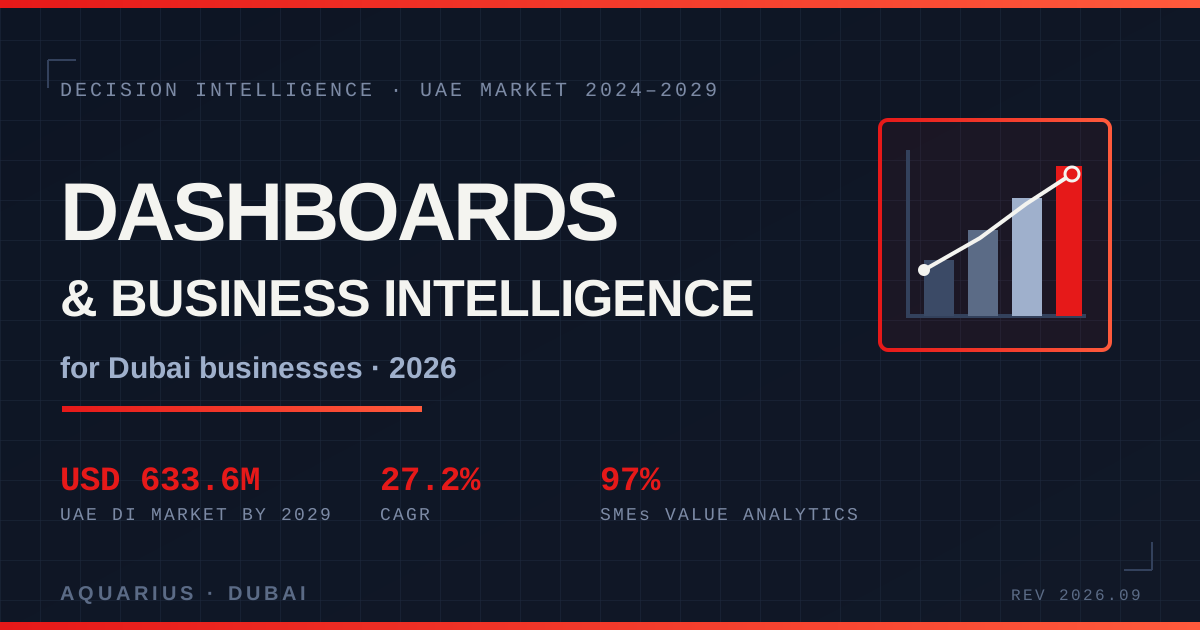
- The UAE decision-intelligence market is forecast to grow from USD 149.9M in 2024 to USD 633.6M by 2029 — a 27.2% CAGR that outpaces the global 24.7% rate.
- 97% of UAE SMEs say data analytics is important to their operations, yet most still run the business on disconnected spreadsheets.
- Most Dubai businesses get this wrong: they buy a Power BI licence and expect insight. The licence is 5% of the problem — the data model and the questions are the other 95%.
- A tool licence is cheap; the engineering that connects your accounting, CRM and operations data into one trustworthy model is where the cost — and the value — sits.
Why Dubai businesses are finally buying dashboards (the awareness case)
Data stopped being optional in the UAE. The country's decision-intelligence market is projected to climb from USD 149.9 million in 2024 to USD 633.6 million by 2029, a 27.2% compound annual growth rate — faster than the 24.7% global pace, according to MarketsandMarkets. That growth is being pulled by government digitalisation, smart-city programmes and enterprise AI adoption across Dubai and Abu Dhabi.
Awareness is not the gap. In Mastercard's SME Confidence Index, 97% of UAE small and medium businesses recognise that data analytics strengthens their operations, and 91% reported optimism heading into 2025. The gap is execution: the same owners who say data matters are still exporting a CSV from their accounting software, pasting it next to a CRM export, and eyeballing a pivot table once a month. The decision still gets made on gut feel — just with a spreadsheet open for reassurance.
A proper BI dashboard closes that gap. It pulls sales, finance, marketing and operations data into one live model and answers the questions that actually run a business: which service line is really profitable after VAT, which customers are quietly churning, whether this month beats last month before the month ends. That is the difference between a report you read and a dashboard you decide from.
Power BI vs custom vs the rest — what you are actually choosing (the consideration layer)
"Dashboard" covers three very different builds, and the price gap between them is real. Choosing the wrong one is the most common — and most expensive — mistake we see in Dubai.
- Power BI (Microsoft): the default for most UAE SMEs and mid-market firms. Deep connectors to Excel, Dynamics, SQL and hundreds of SaaS tools, strong governance, and a licensing model most finance teams already understand. Best when your data lives in Microsoft-adjacent systems.
- Looker Studio / Tableau / Qlik: Looker Studio (free) suits light marketing and web dashboards; Tableau and Qlik suit heavy visual analytics teams. Good tools, but licensing and specialist rates in Dubai run higher for the enterprise tiers.
- Custom-built dashboards: a bespoke web app (React/Next.js on your own database and API). The right call when you need the dashboard embedded in your own product, live operational data by the second, customer-facing analytics, or logic no off-the-shelf BI tool can express. Higher build cost, zero per-seat licensing, full control.
Here is the part nobody selling you a licence will say plainly: the tool is the cheap bit. A Power BI Pro seat is about USD 14 (≈ AED 51) per user per month on annual billing in 2026, and Premium Per User about USD 24 (≈ AED 88). That is rounding error next to the engineering that connects your sources, cleans the data, and models it so the numbers are trustworthy. Buy the licence first and you get a blank canvas and a false sense of progress.
What BI work actually costs per hour in Dubai (AED)
Dashboard work is priced by the skill it demands. Ranges for 2026 Dubai delivery:
| Role | Agency rate (AED/hour) | What they do |
|---|---|---|
| Junior developer / analyst | 250 – 350 | Report building, visuals, basic DAX |
| Mid-level BI consultant | 350 – 500 | Data modelling, transformations, most of the build |
| Senior architect / data scientist | 500 – 750 | Architecture, complex models, predictive layers |
| Project manager / BI lead | 400 – 600 | Scoping, stakeholders, delivery |
The blended rate for a mid-to-senior Power BI team in Dubai lands between AED 350 and AED 650 per hour. Freelancers span AED 250–800 depending on reputation; qualified offshore/nearshore talent runs USD 40–80/hour but carries the usual single-person-dependency and timezone risks — the same trade-off we cover in our guide to custom software vs off-the-shelf.
Real AED build ranges and how to buy well (the decision layer)
Project cost tracks scope, not screens. The three tiers below cover almost every Dubai brief:
| Tier | What you get | Build cost (AED) | Timeline |
|---|---|---|---|
| Focused dashboard | One department, 1–2 clean data sources, core KPIs | 25,000 – 75,000 | 3–6 weeks |
| Integrated BI | Multiple sources joined (finance + CRM + ops), automated refresh, role-based access | 75,000 – 250,000 | 6–14 weeks |
| Enterprise platform | Company-wide data warehouse, governance, predictive/AI layers, custom apps | 250,000 – 500,000+ | 3–6 months |
Then the running costs, which most quotes bury: licensing (from AED 51/user/month for Power BI Pro), a monthly support and enhancement retainer of AED 5,000–15,000, and one-off team training (a full day for ~20 users is AED 8,000–15,000). A dashboard nobody is trained to read is the single biggest waste of a BI budget — the retainer and the training are not optional extras, they are what makes the build pay back.
How Aquarius does it
We build the data model before we build a single chart. That means a short discovery to nail the decisions the dashboard must support, then connecting and cleaning your real sources — accounting, CRM, e-commerce, operations — into one trusted model with VAT handled correctly and role-based access from day one. We pick the tool to fit your stack, not our comfort zone: Power BI when you live in Microsoft, a custom Next.js dashboard when you need it embedded or real-time. And we hand over full ownership — no lock-in — the same way we run every development engagement at fixed AED pricing. Where it helps, we layer in AI automation so the dashboard doesn't just report the past but flags what needs attention now.
The cost of not doing it: in a market growing 27.2% a year on decision intelligence, the competitor who sees their numbers daily is compounding better decisions while you reconcile spreadsheets monthly. The expensive dashboard is the one you never build — every quarter run on gut feel is margin left on the table.
FAQ
How much does a Power BI dashboard cost in Dubai in 2026?
A focused single-department dashboard typically runs AED 25,000–75,000. Integrated multi-source BI is AED 75,000–250,000, and enterprise-wide platforms start around AED 250,000 and can exceed AED 500,000. Add licensing and a monthly support retainer on top.
Do I need to pay for Power BI licences separately?
Yes. Power BI Pro is about USD 14 (≈ AED 51) per user per month on annual billing in 2026; Premium Per User is about USD 24 (≈ AED 88). Licensing is separate from the build cost and is usually the smallest line item.
Should I choose Power BI or a custom dashboard?
Choose Power BI if your data lives in Microsoft/SQL systems and standard connectors cover your sources — it is faster and cheaper to stand up. Choose a custom build when you need the dashboard embedded in your own product, real-time operational data, customer-facing analytics, or logic no BI tool can express.
How long does a BI dashboard take to build?
A focused dashboard is typically 3–6 weeks, an integrated multi-source BI setup 6–14 weeks, and an enterprise platform 3–6 months. Most of the time goes into connecting and cleaning data, not designing charts.
What is the biggest reason BI projects fail in Dubai?
Starting with the tool instead of the questions. Teams buy a licence, build charts on messy data, and produce a dashboard nobody trusts or uses. Model the data around real decisions first, and train the team to read it.
Bottom line
BI in Dubai is no longer a nice-to-have — a USD 633.6M market by 2029 and 97% of SMEs saying data matters make that clear. The winning move is not buying a licence; it is investing in the data model and the decisions behind it, at a realistic AED 25,000–500,000+ depending on scope. Get the model right, train the team, and the dashboard pays for itself in better calls. Want yours scoped in AED? Talk to Aquarius.