
E-Learning & LMS Platform Development in Dubai (2026): Build vs SaaS, Real AED Costs & PDPL
The UAE LMS market races to USD 933M by 2033 at 22.8% CAGR. Here is what a custom e-learning platform costs to build in Dubai in 2026, when SaaS beats it, and the KHDA + PDPL rules competitors ignore.
- PUBLISHED
- 11 SEPT 2026
- READ TIME
- 10 MIN
- AUTHOR
- AQUARIUS · DUBAI
- UNIT
- REV 2026.09
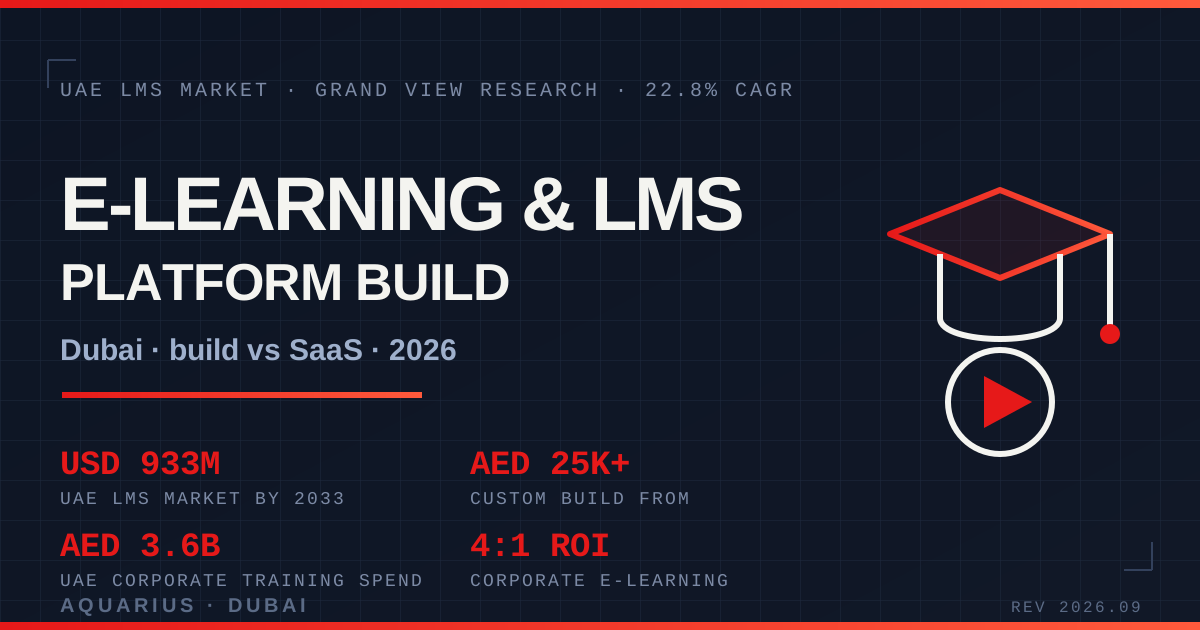
Short answer: a custom e-learning / LMS platform in Dubai — courses, video, assessments, certificates, an admin dashboard and a learner app — typically costs AED 25,000–100,000+ to build, versus per-user SaaS like TalentLMS at USD 119–449/month or Docebo at USD 25,000+/year. Build custom when you have Arabic/RTL, KHDA reporting or PDPL data-residency needs that off-the-shelf tools handle badly; rent SaaS when a standard catalogue and <100 learners is all you need. The prize is a UAE LMS market heading to USD 933.5 million by 2033.
Key takeaways
- UAE LMS market: USD 181.2M (2025) → USD 933.5M (2033), 22.8% CAGR — the fastest-growing software category in UAE education (Grand View Research).
- UAE corporate training budgets are climbing to ~AED 3.6 billion (+20%), roughly USD 1,500 per employee (+25% YoY) — the buyers have money.
- Build cost: AED 25,000–100,000+ custom; SaaS runs USD 119–449/mo (TalentLMS) up to USD 25,000+/yr (Docebo enterprise).
- Moving training online saves 40–60% of cost and 40–60% of employee time, at an average corporate e-learning ROI of ~4:1.
- Two things competitors skip: KHDA licensing for Dubai training institutes and PDPL (Federal Decree-Law No. 45 of 2021) handling of learner data — including whether you host mainland or in a DIFC/ADGM free zone.
Why Dubai is an LMS goldmine in 2026 (TOFU)
Dubai runs on training: KHDA-licensed institutes, corporate L&D for a fast-growing workforce, universities, and edtech startups chasing a regional market. The numbers behind the demand are unambiguous:
- The UAE learning management system (LMS) market was worth USD 181.2 million in 2025 and is forecast to hit USD 933.5 million by 2033 — a 22.8% CAGR, per Grand View Research.
- The broader UAE e-learning services market runs USD 3.65 billion (2024) to a projected USD 7.68 billion by 2030 (~13.1% CAGR).
- UAE corporate training budgets are rising toward AED 3.6 billion, up about 20%, with per-employee spend near USD 1,500 (+25% year on year) — companies are buying, not browsing.
- Government is pulling the same direction: the UAE is introducing AI as a formal K-12 subject from the 2025–26 school year, and the Ministry of Education signed a sovereign-cloud and AI MoU with Core42 in October 2025.
The question is not whether UAE organisations will pay for digital learning — they already are. It is whether you buy a per-seat licence forever or build a platform you own.
Build custom or rent SaaS? The real cost picture (MOFU)
An "LMS" is really three products: a learner experience (catalogue, video, quizzes, certificates, mobile), an author/admin side (course builder, cohorts, analytics), and the plumbing (SCORM/xAPI, payments, Zoom/Teams, CRM, single sign-on). SaaS gives you all of it instantly for a monthly fee; a custom build gives you exactly what you need and the code to keep. Here is what each costs in 2026:
| Option | What you get | 2026 cost |
|---|---|---|
| SaaS — TalentLMS | Hosted LMS, standard features. Core ≤40 users, Grow ≤70, Pro ≤100 (+USD 6/user beyond). 20% off annual. | USD 119 / 229 / 449 per month |
| SaaS — Docebo / enterprise | AI-driven enterprise LMS, sized for 250+ learners, custom quote. | USD 25,000+ / year |
| Moodle (open source) | Licence-free core; you pay for hosting, theming, customisation and support. | Hosting + build only |
| Custom build (Dubai) | Bespoke learner + admin platform, Arabic/RTL, your integrations, your data, you own the code. | AED 25,000–100,000+ |
A custom build in Dubai breaks down roughly as: planning AED 3,000–8,000, UX/UI AED 8,000–25,000, development AED 25,000–70,000, content migration AED 5,000–15,000, and testing/launch AED 3,000–8,000, plus ongoing hosting and support of about AED 1,800–10,000/month. Three UAE-specific factors decide which way you go:
- Arabic / RTL is not a plugin. A credible UAE platform is bilingual with true right-to-left layout, not a translated theme — see our Arabic & RTL best-practices guide. Most SaaS tools handle Arabic poorly; this alone pushes many institutes to custom.
- KHDA obligations. Dubai training institutes are regulated by KHDA (approval typically 4–6 months). An LMS that mirrors your approved course catalogue, tracks enrolment and produces attendance/completion records makes renewals and reporting far less painful — the same discipline as our KHDA school-management build.
- 2026 feature bar. Buyers now expect SCORM + xAPI, mobile learning, AI-driven adaptive paths, gamification, and analytics dashboards. Adaptive learning matters commercially: it lifts course completion by about 25% over a flat ~60% baseline.
The honest rule: with fewer than ~100 learners, a standard catalogue and no Arabic or compliance edge cases, SaaS wins on speed and price. Cross any of those lines — Arabic-first UX, KHDA reporting, PDPL data residency, deep integrations, or 250+ seats where SaaS bills balloon — and a custom build starts paying for itself. This is the same build-vs-buy calculus we lay out for custom software vs off-the-shelf.
PDPL, data residency and what it costs to get wrong (BOFU)
An LMS stores real personal data — names, Emirates IDs, assessment scores, employer records. That puts it squarely under the UAE Personal Data Protection Law (Federal Decree-Law No. 45 of 2021, effective 2 January 2022): documented legal basis, explicit consent, data-subject rights (access, correction, erasure, portability), breach notification and controls on cross-border transfers. One structural decision drives your architecture: mainland UAE follows PDPL, but the DIFC and ADGM free zones run their own data-protection regimes — so where you host and register changes your obligations. See our UAE PDPL compliance checklist for the build-side detail.
How Aquarius does it: we scope the build-vs-buy decision honestly first — if TalentLMS or Moodle fits, we will tell you. When custom wins, we ship an Arabic/RTL-first platform with SCORM/xAPI, video, assessments, certificates and analytics, wire in a UAE payment gateway and Zoom/Teams, and bake PDPL consent, data-subject handling and hosting choice in from sprint one — not bolted on after an audit.
The economics of owning it: corporate e-learning returns about AED 4 for every AED 1 spent, and moving classroom training online cuts cost and employee time by 40–60%. A per-seat SaaS bill scales with every new hire, forever; a one-time build turns that recurring tax into an asset — the customer data, the course IP and the platform all stay yours. See our build pricing or book a scoping call. Related reading: recruitment and job portal development.
Frequently asked questions
How much does it cost to build an LMS in Dubai in 2026?
A custom e-learning platform runs AED 25,000–100,000+ depending on scope, with monthly hosting and support of roughly AED 1,800–10,000. A hosted SaaS alternative like TalentLMS is USD 119–449/month, while enterprise tools such as Docebo start around USD 25,000/year.
Should I build a custom LMS or use Moodle / TalentLMS?
Use SaaS or Moodle if you have a standard catalogue, under ~100 learners and no strong Arabic or compliance requirement. Build custom when Arabic/RTL UX, KHDA reporting, PDPL data residency, deep integrations or large seat counts make per-user SaaS expensive or limiting.
Does an LMS have to comply with UAE PDPL?
Yes. Learner names, IDs and assessment records are personal data under Federal Decree-Law No. 45 of 2021. You need consent capture, data-subject request handling, breach notification and a deliberate hosting choice — noting that DIFC and ADGM free zones run separate data regimes from mainland UAE.
What features do UAE buyers expect in 2026?
SCORM + xAPI support, mobile learning, bilingual Arabic/English with true RTL, video and assessments, certificates, gamification, AI-driven adaptive learning paths, analytics dashboards, and integrations with Zoom/Teams, CRM and a local payment gateway.
The bottom line
The UAE LMS market is compounding at 22.8% a year toward nearly a billion dollars by 2033, and corporate training budgets are following. For a standard, small deployment, rent SaaS and move on. But the moment Arabic-first UX, KHDA reporting or PDPL data residency enters the picture — as it does for most serious Dubai institutes and enterprises — a custom platform from AED 25,000 stops being an expense and becomes an owned asset that earns roughly 4:1 while a per-seat licence keeps billing you forever.