
Gym & Fitness Studio App Development in Dubai (2026): Beat Churn, Build Cost & Retention ROI
One in three UAE gym members cancels every year. A booking-and-retention app pulls monthly churn toward 3% — and a 5% retention lift can raise profit 25–95%. Real 2026 Dubai build costs, market stats and payback maths.
- PUBLISHED
- 11 SEPT 2026
- READ TIME
- 09 MIN
- AUTHOR
- AQUARIUS · DUBAI
- UNIT
- REV 2026.09
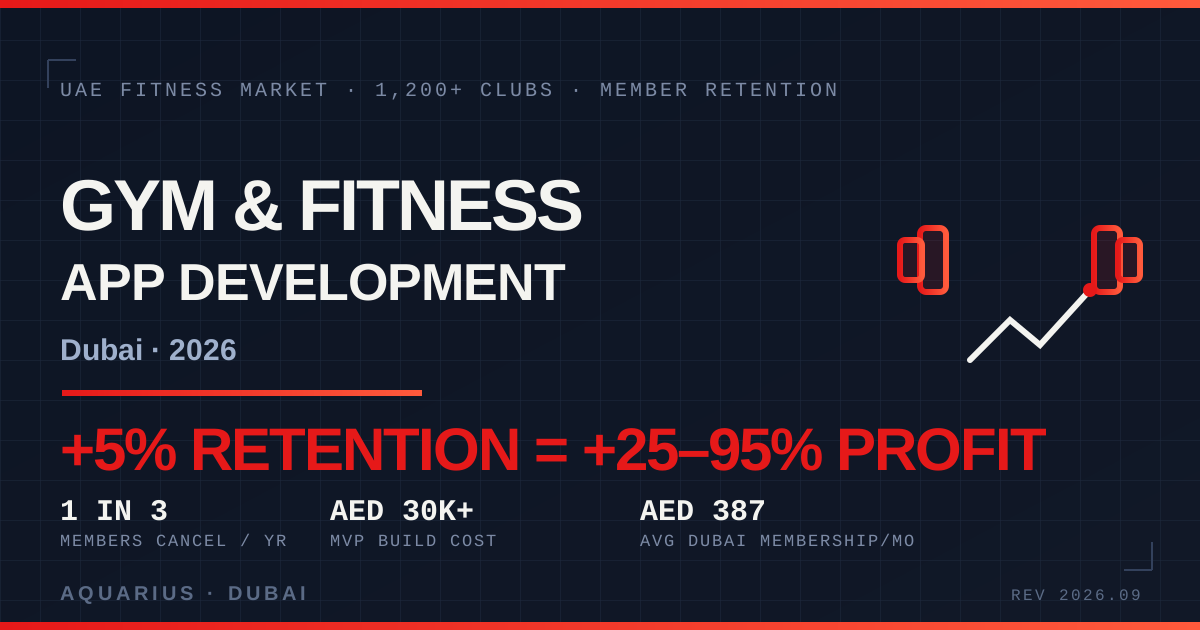
Short answer: a Dubai gym or fitness studio does not have a demand problem — the UAE has 1,200+ fitness clubs in a market worth about USD 505 million in 2025, and the Dubai Fitness Challenge alone pulled in 2.7 million participants. The problem is the back door: the industry average retention rate is 66.4%, meaning roughly one member in three cancels every year, and it costs about 5× more to acquire a member than to keep one. A branded booking-and-retention app fixes the leak — advance class booking, automated reminders, at-risk alerts and community features can drop monthly churn toward the top-operator bar of 3%. A member-app MVP starts around AED 35,000; a full multi-location platform runs AED 90,000–200,000. With a 5% retention improvement able to lift profit 25–95%, most builds pay back inside a year.
Key takeaways: (1) Retention, not sign-ups, is where Dubai gyms bleed — 1 in 3 members cancels yearly and churn concentrates in the first 6 months. (2) Fully onboarded members retain at 87% at six months vs ~60% for those left alone — an app's onboarding and booking flow is the highest-ROI feature, not a nice-to-have. (3) Off-the-shelf tools (Glofox, Zenoti, Fresha) rent you software forever and never give you an owned, branded asset or the member data. (4) Real 2026 Dubai build range: AED 35K (MVP) to AED 450K (multi-branch + AI). Every figure below is real 2026 data.
The Dubai fitness market is booming — and that hides the leak (TOFU)
The top line looks great. The UAE health & fitness club market was worth about USD 505.5 million in 2025 and is forecast to reach USD 751 million by 2034; broader estimates put UAE fitness at USD 1.3 billion today, heading to USD 2.1 billion by 2027. Dubai and Abu Dhabi dominate the spend, and Dubai is the second most expensive city in the world for gym membership at roughly AED 387 (USD 105.60) per month. Gym-membership penetration sits near 12%, and the Dubai Fitness Challenge drew 2,735,158 participants in its latest edition — a vast warm audience actively looking to train.
So demand is not the issue. The issue is that a booming market masks a structural leak: the Health & Fitness Association's 2025 benchmark (17,000+ facilities across 27 countries) puts the industry average retention at 66.4% — one in three members walks every year. In a AED 387/month market, every cancelled membership is roughly AED 4,600 of annual revenue out the door, and the member you spent marketing dirhams to win.
Where members actually leave — and why an app catches them (MOFU)
Churn is not random; it is front-loaded and predictable. Top operators hold monthly churn at or below 3%; 5–7% is typical, and anything higher almost always signals a broken first 90 days. The single most important finding for anyone building a gym app: fully onboarded members hit ~87% six-month retention versus about 60% for members left to figure it out alone. Onboarding is a retention programme, not an admin step — and it is exactly the kind of thing software does relentlessly and a busy front desk does not.
The proven, data-backed levers a member app pulls:
- Advance class booking creates commitment. A member who books tonight's HIIT class is far more likely to attend than one who vaguely plans to "go tomorrow" — the act of scheduling manufactures psychological buy-in, and no-shows are the first symptom of churn.
- Automated reminders + waitlists. Booking wired to payments and automatic reminders cuts no-shows; auto-filling cancellations from a waitlist keeps classes full and instructors busy.
- At-risk alerts. Apps that push a personalised re-engagement message when a member misses their usual session window see 15–25% fewer cancellations. AI-flagged "hasn't checked in for 10 days" prompts let staff intervene before the cancel email.
- Community features. Apps with challenges, leaderboards and friend connections post 20–35% lower monthly churn than solo-experience apps — a direct fit for the Dubai Fitness Challenge crowd.
- Referrals. Members who join via a friend have 37% higher lifetime value and stay 15.6 vs 10.8 months. A built-in referral flow turns your best members into a near-zero-cost acquisition channel.
Note the age skew when you scope features: Gen Z churns hardest at 54.4%, the 65+ cohort lowest at 26.5%. A youthful Dubai membership base is exactly the segment community, streaks and gamification are built to hold.
What it costs to build (real 2026 pricing)
Fitness app development globally runs USD 30,000 to USD 300,000+; gym-specific member-management apps sit at the lower-to-mid end. Converted and calibrated to what Dubai studios quote in 2026:
| Build tier | What you get | Cost (AED) |
|---|---|---|
| MVP member app | iOS + Android, class booking, schedule, automated reminders, digital membership, online payment, admin dashboard | 35,000 – 70,000 |
| Full gym platform | + staff/trainer management, billing & recurring memberships, attendance/check-in, waitlists, loyalty & referrals, at-risk alerts, CRM | 90,000 – 200,000 |
| Multi-branch / AI | + multiple locations, AI workout plans, wearable/Apple-Health sync, marketing automation, owner analytics | 200,000 – 450,000+ |
Timeline is short: a member-app MVP with web admin typically ships in 10–14 weeks, a full SaaS-grade platform in 5–7 months. Budget the usual 15–20% of build cost per year for maintenance, OS/SDK updates and hosting. For a fuller breakdown of app pricing by type, see our guide to how much a mobile app costs in Dubai.
The off-the-shelf route looks cheaper until you read the meter. Glofox, Zenoti, Wodify and Fresha charge per-location monthly fees indefinitely — and marketplace tools take a cut of new clients they surface — while you never own the app, the brand experience or, critically, the member data. A custom app is a one-time capital asset with 0% commission on your own members; the maths flips in your favour once your membership base is steady.
The payback maths, and how Aquarius builds it (BOFU)
Here is the number that justifies the whole build. Take a mid-size Dubai gym with 800 members at AED 387/month — roughly AED 3.7 million in annual revenue. At a typical 5% monthly churn, you lose about 40 members every month; even holding sign-ups flat, that is a relentless drain on marketing spend, because replacing a member costs about 5× more than keeping one. Now cut churn from 5% toward the 3% top-operator bar. That 5% retention improvement translates into a 25–95% profit increase on a base where the fixed costs — rent, equipment, trainers — are already paid. On an AED 90,000–150,000 platform, that lift pays the build back in well under a year, before counting referral LTV or the classes now filled from waitlists.
At Aquarius we build gym and fitness apps as owned assets, not rentals: native iOS + Android, class booking wired to a local gateway (Telr, Stripe or Network International), automated WhatsApp/SMS reminders on the UAE numbers your members actually read, recurring-membership billing, trainer and attendance management, referral and loyalty engines, and at-risk alerts that tell your team who to call this week — integrated with the access-control and POS you already run. See indicative build tiers on our pricing page, or tell us your current churn rate and we'll size the recovery. The same retention engine powers our salon & spa booking apps.
The cost of waiting: a 800-member gym losing one member in three each year is handing roughly AED 1.2 million of lifetime membership value back to the market annually — and paying 5× to win replacements. The app was built to keep them.
FAQ
How much does a gym or fitness app cost in Dubai in 2026?
A member-app MVP (class booking, reminders, digital membership, payments on iOS + Android with an admin dashboard) starts around AED 35,000–70,000. A full gym platform with billing, trainer management, attendance, loyalty and at-risk alerts runs AED 90,000–200,000, and multi-branch or AI-enabled builds go to AED 450,000+.
Will an app actually reduce member churn?
Yes, and the mechanisms are measurable: advance booking creates attendance commitment, fully onboarded members retain at ~87% at six months (vs ~60%), personalised re-engagement pushes cut cancellations 15–25%, and community features lower monthly churn 20–35%. Together they move a typical 5–7% monthly churn toward the 3% top-operator bar.
Should I just use Glofox, Zenoti or Fresha instead of building?
If you run a single studio testing the water, start there. But those tools charge per-location fees indefinitely, and you never own the app, the branded member experience or the data. Once your membership base is steady, a custom app usually costs less over 2–3 years and becomes a sellable business asset with 0% commission on your own members.
How long does it take to build?
A member-app MVP is typically 10–14 weeks; a full multi-feature or multi-location platform 5–7 months, depending on billing, access-control integrations and how many branches you run.
Bottom line: in a UAE fitness market worth over half a billion dollars and a Dubai audience 2.7 million strong at challenge time, the operators who win in 2026 are not the ones with the most sign-ups — they are the ones who stop losing a third of their members every year. A retention app does exactly that, and at AED 35K to build an MVP against a 25–95% profit swing from a 5% retention lift, it is one of the highest-ROI purchases a Dubai gym can make. Talk to Aquarius about yours.