
Event Ticketing & Management Platform Development in Dubai (2026): Stop Losing 10–14% to Booking Fees
Third-party ticketing platforms skim 10–14% off every ticket. Here is what a branded event ticketing platform costs to build in Dubai, the DET ePermit rules, and the break-even math for UAE organizers.
- PUBLISHED
- 11 SEPT 2026
- READ TIME
- 10 MIN
- AUTHOR
- AQUARIUS · DUBAI
- UNIT
- REV 2026.09
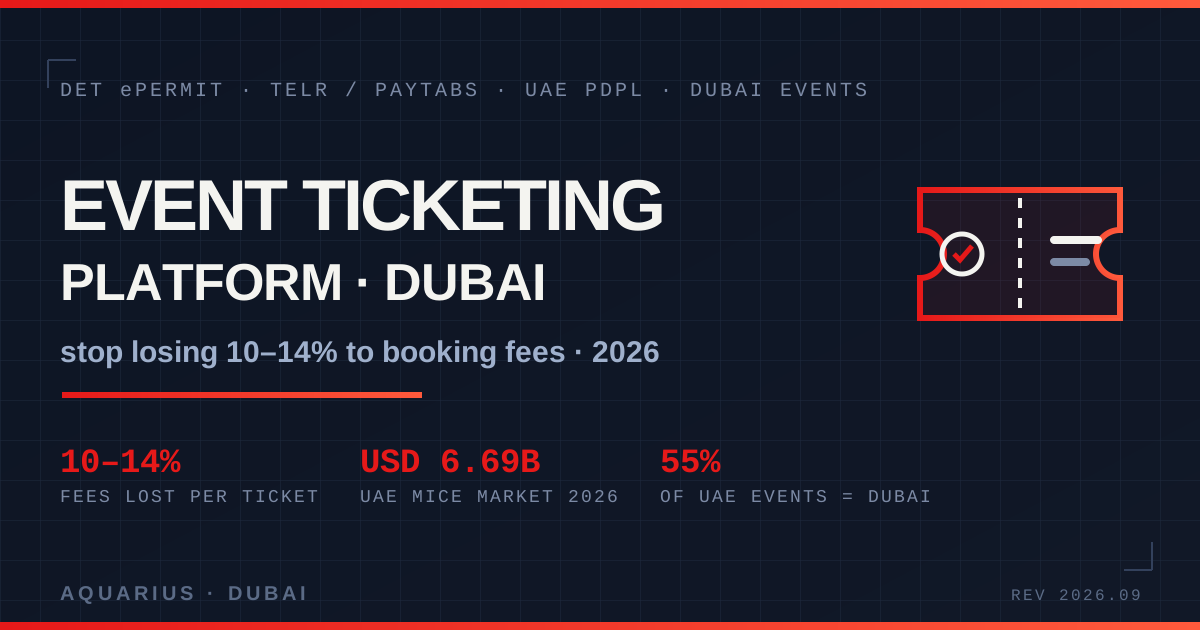
Short answer: A branded event ticketing and management platform for Dubai — a public ticket-buying site, organizer dashboard, on-site QR scanning app and payment/payout engine — costs roughly AED 90,000 for a lean MVP and AED 200,000–500,000+ for a full multi-event platform with reserved seating and AI-driven pricing. It pays for itself because third-party platforms take an effective 10–14% out of every ticket in service and booking fees. Sell AED 3 million of tickets a year and that is roughly AED 300,000–420,000 handed to a marketplace instead of your bottom line — more than the entire build.
Key takeaways
- The UAE MICE market is worth USD 6.69 billion in 2026 and is forecast to hit USD 12.14 billion by 2033 (8.9% CAGR); Dubai alone is ~55% of UAE event activity.
- Third-party ticketing fees run an effective 10–14% per ticket once service fees and payment processing are stacked (Eventbrite 2026: 3.7% + USD 1.79 per ticket + 2.9% processing).
- Build cost: MVP from AED 90,000; growth platform AED 150,000–300,000; full enterprise ticketing AED 200,000–500,000+ (industry range AED 147,000–1,470,000).
- You cannot legally sell a single ticket in Dubai without a DET ePermit (formerly DTCM) — approval takes 3–15 working days and asks for ticketing-platform integration details.
- UAE-must-haves: Arabic (RTL), local gateways (Telr, PayTabs, Network International, Tap), UAE Pass login and PDPL-compliant attendee data handling.
Dubai's events market is huge — and mostly rented (TOFU)
Dubai runs on events. Concerts at Coca-Cola Arena, exhibitions at DWTC, festivals, comedy nights, conferences, sporting fixtures and thousands of paid workshops and community shows fill the calendar year-round. The money behind it is not small:
- The UAE MICE (meetings, incentives, conferences, exhibitions) market is valued at USD 6.69 billion in 2026 and is projected to reach USD 12.14 billion by 2033, an 8.9% compound annual growth rate.
- The broader UAE event management market sits near USD 2.62 billion in 2026, up from USD 2.46 billion in 2025 — and Dubai holds about 55% of that activity, drawing roughly 5.25 million qualifying participant visits across the UAE.
- Dubai World Trade Centre alone hosted 401 events in 2025, up 6% year on year, while Dubai Business Events secured 437 international bids in 2024 expected to bring in more than 210,500 delegates.
Here is the catch most Dubai organizers get wrong: almost all of them rent their ticketing. They list on a marketplace, hand over the customer relationship, and pay a fee on every sale. That is fine when you run one show a year. Once you are running a series, a venue, a festival or a recurring conference, you are effectively paying a tax on your own audience — forever.
What the third-party platforms actually cost you (MOFU)
The headline commission is never the real number. Ticketing fees stack: a per-ticket service fee, a percentage of face value, and payment processing on top. Eventbrite's public 2026 pricing is 3.7% + USD 1.79 per paid ticket plus 2.9% per order in processing — which works out to an effective ~10.2% on a USD 50 ticket and ~13.8% on a USD 25 ticket. Regional platforms sit in the same band: organizer commission plus a booking fee bolted onto the buyer's total, landing most events at an effective 10–14%.
Run that against real Dubai volume:
| Annual ticket sales (GMV) | Fees at ~12% | What that buys instead |
|---|---|---|
| AED 1,000,000 | ≈ AED 120,000/yr | A lean MVP platform in year one |
| AED 3,000,000 | ≈ AED 360,000/yr | A full growth build, paid off in months |
| AED 8,000,000 | ≈ AED 960,000/yr | An enterprise platform + a marketing budget |
Beyond the money, the marketplace keeps the thing you actually need: the buyer's data and the repeat relationship. You do not own the email list, you cannot retarget past attendees cleanly, and you compete for attention against every other event on the same platform. A branded platform flips all three — the traffic, the data and the upsell are yours.
What a Dubai-ready ticketing platform must include
- Buyer storefront: event pages, tiered/early-bird tickets, promo codes, group bookings, and (for concerts/theatre) reserved-seat maps.
- Organizer dashboard: create events, set pricing tiers, real-time sales, capacity, refunds and payout tracking.
- On-site check-in app: offline-capable QR/barcode scanning to stop fraud and re-entry — the single feature that saves you at the door.
- Local payments & payouts: Telr, PayTabs, Network International, Tap or Stripe UAE, plus Apple Pay/Google Pay; automated organizer payouts for multi-organizer setups.
- Arabic + English with full RTL, and ideally UAE Pass login to cut checkout friction.
- PDPL-compliant data handling — attendee names, contacts and payment tokens are personal data, so consent, retention limits and secure storage are legal requirements, not extras. (See our UAE PDPL compliance checklist.)
- DET ePermit workflow awareness: the platform should hold permit/venue details, because you cannot promote or sell a ticket in Dubai before DET approval.
The DET ePermit reality (don't skip this)
Every public event in Dubai — free or ticketed — needs a valid DET ePermit (the successor to the DTCM permit), submitted through the DET ePermits portal. You are not allowed to promote, advertise or sell a single ticket before approval. Approval typically takes 3–15 working days depending on event type and scale, and the application commonly requires a valid UAE trade licence, a venue NOC, security and crowd-management plans, artist/speaker IDs and — increasingly — your ticketing platform integration details. Building your own platform makes this easier, not harder: you control the reporting DET wants and can produce accurate capacity and sales data on demand.
Pricing, payback and how Aquarius builds it (BOFU)
Realistic 2026 build tiers in Dubai:
| Tier | What you get | Cost (AED) |
|---|---|---|
| MVP | Single-organizer storefront, tiered tickets, one gateway, QR check-in app, basic dashboard | 90,000 – 150,000 |
| Growth | Reserved seating, multiple gateways + payouts, promo codes, WhatsApp/email comms, analytics, Arabic RTL | 150,000 – 300,000 |
| Enterprise | Multi-organizer marketplace, AI/dynamic pricing, UAE Pass, access control hardware, BI dashboards | 200,000 – 500,000+ |
Independent estimates put a serious ticketing platform build between AED 147,000 and AED 1,470,000 depending on scope — the spread is mostly seating engines, payout logic and compliance. Now the payback: an organizer selling AED 3 million of tickets a year bleeds roughly AED 360,000 annually in platform fees at 12%. Against a growth build of AED 150,000–300,000, the platform pays for itself inside 6–10 months — and every ticket after that keeps the full margin, plus the audience data that fuels the next event.
The cost of not building is compounding: each event you route through a marketplace is another year of fees and another audience you rebuild from scratch. For a venue or a recurring series, that is six figures a year, permanently rented.
How we approach it at Aquarius: we ship a tight MVP so you prove one event flow end-to-end (buy → pay → scan → payout) before spending on seat maps or dynamic pricing; we build Arabic/RTL and PDPL handling in from day one because retrofitting compliance costs more later; and we wire in local gateways and payouts so money moves the way UAE buyers and organizers expect. See what we build and how we price. If you also run field or door operations, our logistics platform breakdown covers the same offline-first, real-time mechanics.
FAQ
How much does it cost to build an event ticketing platform in Dubai?
A lean MVP starts around AED 90,000. A growth platform with reserved seating, multiple gateways and payouts runs AED 150,000–300,000, and a full enterprise/marketplace build is AED 200,000–500,000+. Industry estimates span AED 147,000–1,470,000 depending on scope.
Is it cheaper to build my own or keep using Platinumlist/Eventbrite?
It depends on volume. Third-party platforms cost an effective 10–14% per ticket. If you sell more than about AED 1.5–2 million of tickets a year, a branded platform usually pays for itself within the first year — and you keep the customer data.
Do I need a DET permit to sell event tickets in Dubai?
Yes. Every public event needs a DET ePermit (formerly DTCM), and you cannot legally promote or sell tickets before approval. Budget 3–15 working days and prepare your trade licence, venue NOC, security plan and ticketing details.
What payment gateways work for a UAE ticketing platform?
Telr, PayTabs, Network International, Tap and Stripe UAE all work, plus Apple Pay and Google Pay. For multi-organizer marketplaces you need a gateway that supports split payments and automated payouts.
Do I need Arabic and PDPL compliance?
Yes to both. A large share of UAE buyers expect an Arabic/RTL experience, and PDPL governs how you collect and store attendee names, contacts and payment data — design both in from the start.
Bottom line: Dubai's events market is a multi-billion-dollar machine, and most organizers rent their ticketing at 10–14% a ticket while giving away their audience. If you sell meaningful volume, build a lean, DET-aware, PDPL-compliant platform for AED 90,000–300,000, own your buyers, and stop paying a marketplace tax on your own events. Talk to Aquarius about scoping your build.