
Noon & Amazon.ae vs Your Own Store (Dubai 2026): What Marketplace Commission Really Costs
Noon and Amazon.ae take 5-27% referral plus fulfilment, storage and returns — 30-40% of revenue all-in. Here is the real 2026 math, and what a D2C store in Dubai costs instead.
- PUBLISHED
- 13 SEPT 2026
- READ TIME
- 10 MIN
- AUTHOR
- AQUARIUS · DUBAI
- UNIT
- REV 2026.09
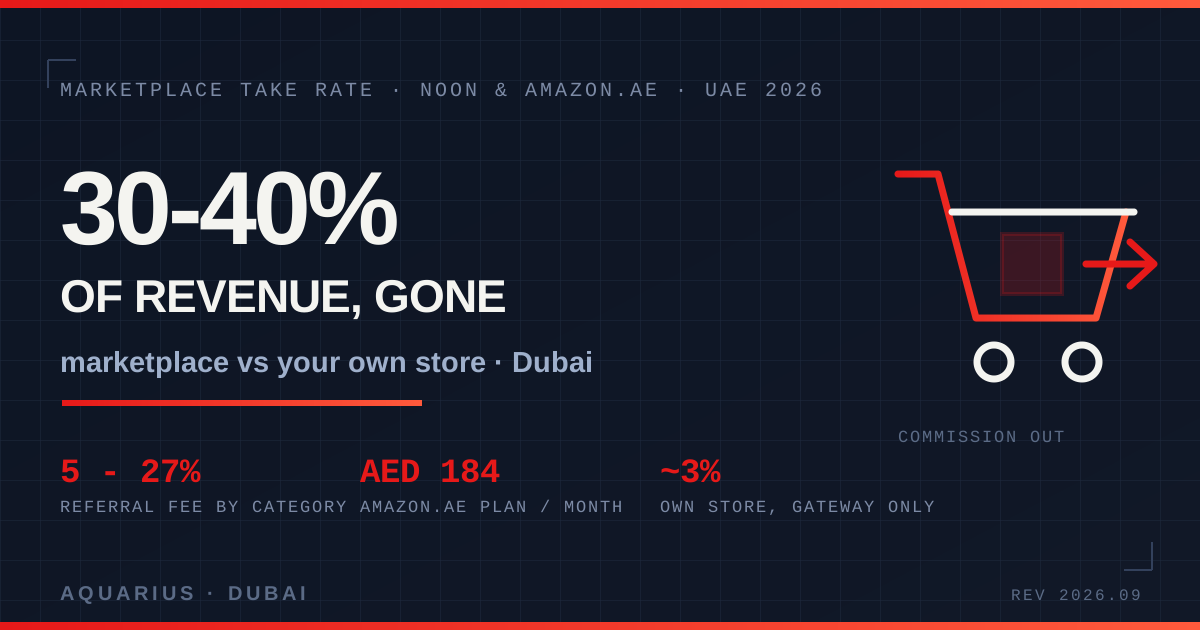
Short answer: selling on noon or Amazon.ae in 2026 costs far more than the headline commission. Referral fees run 5% to 27% by category (minimum AED 1 per item on both), and once you add fulfilment, outbound delivery, storage, returns and the AED 184/month Amazon.ae Professional plan, a typical marketplace-fulfilled seller gives up 30-40% of revenue. The same order on your own store costs roughly 2.5-3% — the payment-gateway fee — plus whatever you pay to ship it. For a UAE brand doing AED 2 million a year on the marketplaces, that gap is around AED 400,000-500,000 annually, which is several times the cost of building the store.
Key takeaways
- The UAE market is worth fighting for. Ecommerce reached USD 12.30 billion in 2026, heading for USD 21.01 billion by 2031 at an 11.29% CAGR, across 11.04 million online shoppers.
- Referral fees are only the start. Amazon.ae starts at 5% (min AED 1) and reaches ~16% on jewellery; noon runs roughly 5-18% with fashion categories as high as 27%. Fulfilment, storage and returns push the all-in take to 30-40%.
- Fee schedules moved against sellers in 2025. Amazon.ae raised FBA fulfilment fees and lifted Business/Industrial/Scientific referral from 10% to 11% on 1 August 2025; noon's revised FBN and FBP fee tables took effect 1 September 2025.
- Your own store is a ~3% channel. Telr, PayTabs and Stripe UAE sit at 2.49-2.9% + AED 1. Tabby or Tamara cost more (4-7%) but lift basket size — one UAE case saw AOV move from AED 340 to AED 510.
- Build cost is not the blocker. Shopify builds run AED 8,000-30,000, custom or headless platforms AED 45,000-180,000+. Most Dubai brands doing real marketplace volume recover that inside one year.
TOFU: the UAE has 11 million online shoppers — and two landlords
The demand side of this decision is settled. UAE ecommerce hit USD 12.30 billion in 2026 and is forecast to reach USD 21.01 billion by 2031, an 11.29% CAGR, served to roughly 11.04 million online shoppers. Business-to-consumer transactions generated 67.89% of 2025 value, and 78.67% of 2025 transaction volume came from smartphones — this is a mobile-first market, and it is still growing at double digits while much of the world flattens out.
The distribution side is where it gets expensive. For most UAE categories, discovery runs through two platforms, and both have spent 2025 and 2026 making themselves harder to leave. In January 2026 noon activated 20 additional dark stores across Dubai and Abu Dhabi, pushing real-time inventory coverage to 85% of urban households and cutting average delivery windows to 12 minutes. Amazon.ae keeps expanding Prime logistics. Speed like that is genuinely hard to match alone — and it is exactly why the platforms can charge what they charge.
Meanwhile, the shopper has stopped paying cash. Cash-on-delivery volumes have fallen sharply and now represent roughly 20-25% of UAE online orders, mostly first-time buyers, while digital wallets climbed from 41% usage in 2020 to 53% in 2024. Buy-now-pay-later went from niche to default: the UAE BNPL market was USD 1.17 billion in 2025 and is projected to reach USD 3.92 billion by 2031, with 40%+ of UAE consumers using Tabby, Tamara or a bank instalment product. Translation: the payment stack that used to be a marketplace advantage is now available to any brand that wants it.
MOFU: what noon and Amazon.ae actually charge (2026 fee tables)
Most Dubai sellers get this wrong: they compare the referral percentage to their gross margin, conclude "12% is fine", and never model the rest. Referral fee is one of five or six line items. Here is the current picture on both platforms.
| Cost line | Amazon.ae (2026) | noon (2026) |
|---|---|---|
| Referral / sales commission | From 5% (min AED 1); ~16% jewellery; Business/Industrial/Scientific raised 10% → 11% on 1 Aug 2025 | Roughly 5-18% typical, min AED 1 per item; fashion categories up to 27%, electronics at the low end |
| Subscription | AED 184/month Professional plan (currently waived under a promotion) | None — commission-only model |
| Fulfilment per unit | FBA AED 7.2-9.2 (≤0.25kg), AED 9.5-11.5 (≤2kg), AED 19.5-21.5 (≤12kg); oversize to AED 39.5-41.5 (≤30kg) | FBN fulfilment + outbound delivery charged per unit by weight and dimensions, revised 1 Sept 2025 |
| Storage | ~AED 2 per cubic foot per month | AED 0.2-5 per item, by size |
| Returns & reverse logistics | Charged per return; rates vary by size tier | Charged per return under both FBN and FBP |
| Realistic all-in take | 30-40% of revenue for a typical platform-fulfilled seller | |
Two details matter more than the percentages. First, the fees move, and they move one direction. Both platforms reissued their UAE fee schedules within a month of each other in 2025 (Amazon.ae on 1 August, noon on 1 September), with fulfilment rates rising to "align with operational costs". You have no vote and no notice period worth planning around. Second, the platform keeps the customer. You do not get the buyer's email, you cannot retarget them, you cannot run a returning-customer offer, and a competitor's ad can sit on your own product page. You are renting demand, and the rent is indexed.
Now the same order on your own store. A UAE-acquired gateway costs 2.49-2.9% + AED 1 per transaction: Telr at 2.69% + AED 1 on its AED 149/month tier or 2.49% + AED 0.50 on the AED 99 tier, PayTabs from around 2.85% + AED 1, Stripe UAE at 2.9% + AED 1. Add Tabby or Tamara at 4-7% of order value plus AED 1-2 if you want BNPL, which is usually worth it above an AED 150 basket — one UAE store recorded average order value rising from AED 340 to AED 510 in the first month after adding Tabby, paying the ~6% merchant fee back several times over. Stores above AED 100k/month in card volume typically negotiate 0.5-1 percentage point off list rates.
MOFU: the hybrid is the right answer — but only if you run it deliberately
This is not an argument for deleting your seller accounts. The marketplaces are the cheapest customer acquisition in the UAE for a product nobody is searching for by brand name, and noon's 12-minute urban delivery is a genuine service advantage. The mistake is treating them as your whole business instead of the top of your funnel.
The pattern that works for Dubai brands: keep the marketplaces for discovery and first purchase, and engineer every repeat purchase onto the channel you own. Practically, that means:
- Insert-card and packaging routing — a QR code to your store with a returning-customer offer the marketplace cannot see or match.
- Own the high-margin and bundle SKUs. List your entry product on the platforms; keep multipacks, subscriptions and bundles exclusive to your site, where a 3% channel fee makes them viable.
- A single inventory source of truth. One stock pool syncing to noon, Amazon.ae and your own store, so a sell-out on your site does not become a late-shipment metric hit on theirs.
- Match the platform's checkout, not just its prices. Card, Apple Pay, Tabby and Tamara, COD for the ~20-25% who still want it, Arabic and English, and a mobile flow that loads fast — 78.67% of UAE transactions happen on a phone.
- Get the tax layer right from day one. VAT registration is mandatory once taxable supplies pass AED 375,000 in 12 months (voluntary from AED 187,500), at the 5% rate, and every order needs a compliant tax invoice showing your TRN — structured so the move to mandatory e-invoicing is a config change, not a rebuild. See our UAE e-invoicing guide.
BOFU: the break-even math, and how Aquarius builds it
Run your own numbers, but here is the shape of it. A UAE brand doing AED 2 million a year through noon and Amazon.ae at a conservative 22% blended all-in take pays the platforms AED 440,000 annually; at the 30-35% that platform-fulfilled sellers typically hit, it is AED 600,000-700,000. Move just 25% of that volume to your own store, where the channel cost is ~3%, and you keep roughly AED 95,000-160,000 every year — before counting the value of owning the customer list.
Against that: a Shopify build with Arabic, BNPL and VAT-compliant invoicing runs AED 8,000-30,000, and a fully custom or headless platform AED 45,000-180,000+, with 15-20% of build cost a year for hosting, security and upkeep. Even at the top of the Shopify band, the payback on that example is measured in weeks, not years. The cost of inaction runs the other way: every year you stay platform-only, your fee schedule gets rewritten without you, and your most valuable asset — a list of UAE buyers who already bought from you — stays on someone else's server.
How Aquarius builds it: (1) a fast, mobile-first storefront in Arabic and English with RTL done properly; (2) UAE-acquired gateway integration (Telr, PayTabs, Network International, Stripe or Tap) plus Tabby and Tamara, and a COD workflow with verification for the cash segment; (3) inventory sync so noon, Amazon.ae and your own store never contradict each other; (4) 5% VAT invoicing with TRN, built e-invoicing-ready; and (5) conversion work on the parts that actually decide the sale — page speed, product media, trust signals and a checkout that does not ask for a company name. Fixed-scope quotes in AED, source code and data you own. See our pricing, compare Shopify against a custom build, or send us your category and monthly volume and we will model the switch for you.
FAQ
How much commission do noon and Amazon.ae charge UAE sellers in 2026?
Amazon.ae referral fees start at 5% (minimum AED 1 per item) and reach around 16% on categories such as jewellery, with the Business, Industrial and Scientific category rising from 10% to 11% on 1 August 2025. noon's commission runs roughly 5-18% by category, with some fashion categories reported as high as 27% and electronics at the low end. Both charge a minimum of AED 1 per item sold.
What is the real all-in cost of selling on a UAE marketplace?
For a platform-fulfilled seller, typically 30-40% of revenue. On top of the referral fee you pay per-unit fulfilment (Amazon FBA runs roughly AED 7.2-21.5 for standard parcels, more for oversize), storage (AED 2 per cubic foot per month on Amazon, AED 0.2-5 per item on noon), return and reverse-logistics charges, and on Amazon.ae an AED 184/month Professional plan when the current promotional waiver ends.
What does it cost to run my own store instead?
The channel cost is the payment gateway: 2.49-2.9% + AED 1 per transaction with Telr, PayTabs or Stripe UAE. Tabby and Tamara cost 4-7% plus AED 1-2 but typically raise average order value enough to pay for themselves above an AED 150 basket. You also carry your own shipping, which the marketplace fee was previously bundling.
Should I leave noon and Amazon.ae completely?
Usually no. Run a hybrid: keep the marketplaces for discovery and first purchase, then move repeat buyers to your own store with insert cards, returning-customer offers, and bundles or subscriptions you list nowhere else. Keep one inventory source of truth syncing all three channels so a sell-out on your site never damages your platform seller metrics.
When do I have to register for VAT as a UAE online seller?
Registration is mandatory once your taxable supplies exceed AED 375,000 over the preceding 12 months, and voluntary from AED 187,500. The rate is 5%, displayed consumer prices should be VAT-inclusive, and every order needs a compliant tax invoice showing your TRN — on marketplace and direct sales alike.
How long does it take to launch a Dubai D2C store?
A Shopify build with Arabic, BNPL and VAT invoicing is typically 3-6 weeks; a custom or headless platform with marketplace inventory sync runs 8-16 weeks depending on catalogue size and ERP integration. See our full UAE ecommerce build guide for the payment and logistics detail.
Bottom line: in a UAE market heading from USD 12.30 billion to USD 21.01 billion, noon and Amazon.ae are excellent shop windows and expensive landlords — 30-40% of revenue all-in, on fee schedules they rewrite without asking. A store you own turns that into a ~3% channel and hands you the customer list. Keep the marketplaces for discovery; stop paying them rent on customers who already know your name. Talk to Aquarius about a UAE D2C build sized to your catalogue.