
Clinic & Medical Website Development in Dubai (2026): DHA-Ready Booking & Patient Portals
What a DHA-ready clinic website with online booking costs in Dubai (2026): AED ranges by tier, the PDPL/health-data rules you cannot skip, and the bilingual booking features that turn searches into appointments.
- PUBLISHED
- 08 SEPT 2026
- READ TIME
- 08 MIN
- AUTHOR
- AQUARIUS · DUBAI
- UNIT
- REV 2026.09
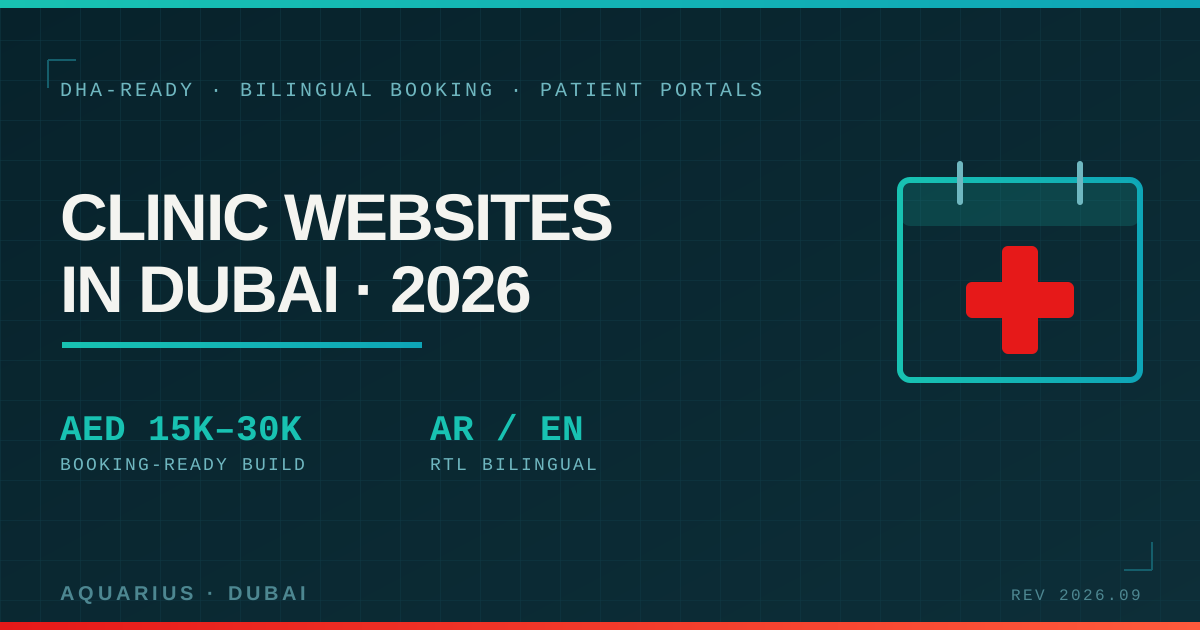
Short answer: a professional, bilingual clinic website with real online appointment booking costs roughly AED 15,000–30,000 in Dubai in 2026. A basic brochure site starts around AED 7,000–12,000; an advanced build with EMR integration, payments and multi-branch scheduling runs AED 30,000–60,000+, and a full secure patient portal starts near AED 70,000. "DHA-compliant" is not a certificate you buy — it means the site is engineered to support your clinic's obligations under UAE health-data law: HTTPS everywhere, secure booking (not clinical info over email/WhatsApp), a real privacy/consent flow, and access controls. Get the booking and the Arabic/RTL right and the site pays for itself in captured appointments.
Why a clinic website is now the front desk (the Dubai numbers)
Dubai's healthcare market is not short of demand — it is short of clinics that are easy to book online. As of the latest DHA Statistical Yearbook (2024 data), Dubai has 5,372 licensed health facilities — including 57 hospitals and 1,665 polyclinics — staffed by 66,070 licensed healthcare workers. That is a lot of competition for the same patient typing "dermatologist Dubai" or "dentist Jumeirah" into Google at 11pm. Related reading: DHA and NABIDH healthcare app compliance.
The market backing this is large and digitising fast: the UAE healthcare market is estimated at around US$26 billion (Burjeel Holdings, 2025), while the narrower UAE digital-health market is forecast to grow from US$469.8 million in 2025 to US$1.24 billion by 2030 — a 21.4% CAGR (MarketsandMarkets). Patient behaviour has already moved: UAE surveys put resident sentiment toward telehealth and e-health services as high as 79% positive (Gulf News, 2025). Translation: patients expect to find you, trust you, and book you online — before they ever call.
Most Dubai clinics still treat the website as a digital brochure. In 2026 it is the front desk: if a patient cannot book in three taps, they book the clinic that lets them.
What a Dubai clinic website must actually include
Compliance keeps you legal; the patient experience keeps you booked. A serious clinic site in 2026 needs both — here is the build spec.
1. Patient-facing essentials
- A clear "Book Appointment" CTA on every page — the whole site exists to drive this one action.
- Individual doctor profiles — specialty, qualifications, languages spoken, and DHA licence/credentials. Trust signals that also rank for doctor-name searches.
- A dedicated page per major treatment/service — this is how patients search ("IV therapy Dubai", "invisalign Dubai"), so each service needs its own SEO-friendly page.
- Click-to-call + WhatsApp, Google Maps with parking and hours, and insurance information — the questions every UAE patient asks before booking.
- Reviews, FAQ and a health-information blog for authority and People-Also-Ask visibility.
2. DHA & data-protection setup (the part vendors skip)
There is no "DHA-compliant website" badge a developer can sell you — the clinic remains responsible for regulatory compliance, and the website must be built to support that. UAE rules require health data to be kept confidential, protected against unauthorised alteration or deletion, and available only to authorised parties. The Federal Personal Data Protection Law (PDPL) governs consent, security and cross-border transfer of personal data, and Federal Law No. 2 of 2019 on ICT in health fields adds health-specific protections. In practice that means:
- HTTPS/SSL everywhere and secure handling of every appointment record.
- A real privacy policy, consent notices and cookie controls appropriate to the data you collect.
- Secure booking/EMR integration instead of emailing or WhatsApping clinical information around.
- Role-based access controls for staff/admin accounts, plus backups and monitoring.
- Clear data-processing arrangements with any third-party booking/CRM provider.
Don't accept "DHA compliant" as a line item on a proposal. Ask the developer to specify exactly what they implement — and what remains your clinic's legal responsibility. Vague compliance is how clinics get exposed.
3. Genuinely bilingual (English + Arabic/RTL)
Dubai's digital-service framework emphasises both Arabic and English accessibility. That means proper right-to-left (RTL) layout across menus, forms, buttons and the booking screens — not an English site with machine-translated Arabic bolted on. Arabic SEO matters too: patients search in both languages, and most clinic sites compete in only one.
4. Booking that actually books
This is where the budget should go — not flashy animations. Real booking shows doctor → service → date/time → patient details → confirmation, and it should:
- Show live doctor availability and prevent double-bookings.
- Allow cancel/reschedule, and send confirmation + reminder messages (reminders cut no-shows).
- Give reception an admin calendar and integrate with your practice-management/EMR system if you have one.
- Keep patient information out of insecure email/WhatsApp workflows.
What it costs in Dubai (2026 AED)
Current Dubai market quotes put clinic sites with booking around AED 12,000–30,000, with advanced platforms starting near AED 30,000. Here is how the tiers break down and what each buys you.
| Tier | Typical AED range | What you get |
|---|---|---|
| Basic clinic site | 7,000 – 12,000 | 5–10 pages, mobile, WhatsApp/contact forms, basic SEO |
| Professional clinic site | 15,000 – 30,000 | EN/AR, doctor profiles, treatment pages, online booking, SEO, analytics, security |
| Advanced clinic | 30,000 – 60,000+ | EMR/API integration, multiple doctors/branches, payments, sophisticated booking |
| Patient portal / platform | 70,000+ | Secure logins, records, dashboards, complex integrations |
Two things move the number most: whether you integrate an EMR/practice-management system (API work is real build time — tell the developer before quoting) and how much custom Arabic content you need. Then budget separately for the essentials that keep the site alive: hosting commonly runs AED 500–1,500/year for a standard site, though secure healthcare hosting and maintenance can be higher, plus ongoing content and SEO.
How Aquarius builds clinic websites — and what it earns you
We build bilingual (EN/AR, true RTL) clinic websites with real online booking, doctor and treatment pages, secure appointment handling, and privacy/consent implemented properly — quoted in fixed AED against a clear scope. If you run an EMR or practice-management system, we integrate the booking flow into it rather than bolting on a form that emails your reception. For most established Dubai clinics the sweet spot is AED 18,000–25,000 for a 15–25 page bilingual build with booking, local SEO, analytics and 6–12 months of security support. Related reading: appointment booking systems for clinics and salons.
The ROI case is simple: with a UAE digital-health market compounding at 21.4% a year and 79% of residents already comfortable booking care online, the cost of not having frictionless online booking is measured in appointments walking to the clinic next door. A site that captures even a handful of extra bookings a week clears its build cost inside the first year — then keeps earning. Related reading: medical tourism website development.
Want a tighter AED number for your clinic? Tell us your specialty, number of doctors and branches, and whether you use an EMR. See our pricing, explore what we build, or send your goal and we'll model it. New to Dubai web budgets? Start with our 2026 cost guide.
FAQ
How much does a clinic website with online booking cost in Dubai in 2026?
A professional bilingual clinic site with real online booking typically costs AED 15,000–30,000. Basic brochure sites start around AED 7,000–12,000, advanced builds with EMR integration and payments run AED 30,000–60,000+, and full secure patient portals start near AED 70,000. Budget hosting and maintenance separately.
What makes a clinic website "DHA-compliant"?
There is no single DHA certificate for websites. Compliance means the site supports your clinic's legal obligations under the UAE Personal Data Protection Law and Federal Law No. 2 of 2019 on ICT in health: HTTPS everywhere, secure handling of appointment data, a proper privacy/consent flow, role-based access controls, and secure EMR/booking integration instead of clinical information sent by email or WhatsApp. The clinic remains legally responsible; the developer builds to support it.
Does a Dubai clinic website need to be in Arabic?
Yes — a genuinely bilingual English/Arabic site with proper RTL layout is strongly recommended, including on the booking screens. Dubai's digital-service framework emphasises both languages, patients search in both, and Arabic SEO is an advantage most competing clinic sites ignore. Avoid machine-translated Arabic bolted onto an English site.
Should the booking system connect to our EMR or practice-management software?
If you already use an EMR or practice-management system, integrating it is worth the extra cost: it shows live availability, prevents double-bookings, and keeps patient data secure rather than scattered across email. Tell your web developer about the system before getting a quote — API integration materially changes the price.